



Residential

How to Select the Best Water Pump for Domestic Use in India?
blog list, Checklist, General Guidence, Pumps, Residential

How to Select the Best Water Pump for Domestic Use in India?

A Guide to select the best water pump for domestic use in India Welcome to the world of water pumps. Water pumping has come through a great evolution in the past decades. With the recent advancements in technologies, the water pumps have evolved to the next generation pumps. If you get to look at the products offered in the market, the water pumps are available for any certain capacity and the products are available starting 0.5 HP till 10 HP.   Different types of pumps available for use Submersible Pumps Usually, these pumps are submerged inside the water tank, open well, or a Borewell. Centrifugal Pumps These are usually high-performance pumps used in heavy applications with a steady flow of water. Booster Pumps These pumps boost the speed of water inside your house, ensuring equal distribution of water in all outlets. If you are looking for a spa in your bathroom shower, this is the pump for you. I Smart Pumps The pumps with multiple benefits and suit all the residential needs. NextGen pumps The pumps are advanced in technology and bring in comfort and ease of use for any residential pumping needs.   Now that you are aware of the various pump types, let us now understand the list of questions you need to ask to select the right pump. Here we go: 1. What is your required flow of water? Usually, the flow of water depends on your consumption and the capacity of the underground tank to the overhead tank. The flow is an important criterion while you choose your pump. 2. Do you have any electricity fluctuation? There are various advanced pumps in the recent decades that can accommodate electricity and power fluctuations. Also, you need to check whether you have one phase or 2 phase, or 3 phase electricity connection at your residence. 3. Does the pump provide electricity savings? Check if the pumps are BEE Star Rated. The star ratings are awarded by BEE (Bureau of Energy Efficiency, Ministry of Power, and Government of India) after a series of rigorous testing to identify the total savings, and based on the grade of savings, the pumps are offered star ratings. 5 star rated pumps offer the best power savings. 4. What will be the power consumption? The water pumps will consume electricity and be measured in kilowatt (kW) or horsepower (HP). The HP varies based on the requirement of the pumping needs and for residential needs, the HP varies from 0.5 to 1.5 HP. For apartments and larger applications, the HP can extend to 100’s of HP. We are sure you have heard these terms when your plumber or electrician speaks about the need for the pumps. Again summarizing, ask the plumber or electrician, or mechanic the following questions before choosing if you need a larger pump. How long do I need to run the pump to fill the overhead tank? What will be the electricity bill consumption? What’s the star rating in the pump? What if there are electricity fluctuations, will the pump be able to work in fluctuations? What HP of pumps is required? (Anything above 1.5HP for residential or for your bungalow, is to be cross-checked) What’s the guarantee and the warranty the pump offers? Where do I need to register the warranty? How about the after-sales service? Where is the closest service center? In the case of booster pumps, what’s the overall tank capacity? Equipped with this information, you now will be in a position to make a smart decision before buying a water pump C.R.I.’s water pumps have been designed with these needs in mind. They are sturdier and deliver effective performance with low power consumption. Fit & Forget as a motto, C.R.I. offers a wide range of residential, domestic, agricultural, and solar pumps, and it has been the preferred choice of many buyers over time. With superior motors, anti-corrosive coating, high efficiency, low power consumption, and conservation of water, C.R.I. has revolutionized the way we perceive water pumps.
How To Select Submersible Pump For Borewell?
blog list, Checklist, General Guidence, Guides, Pumps, Residential

How To Select Submersible Pump For Borewell?

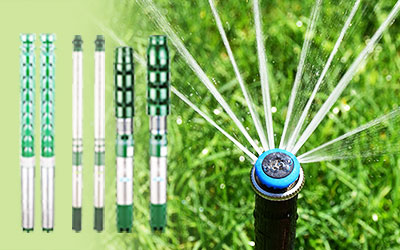
SELECTING A SUBMERSIBLE PUMP FOR A BOREWELL Water problems in India have long plagued rural and urban areas alike. Borewells provide accessible sources of groundwater, and to be fully functional, a borewell submersible pump is necessary. Borewell submersible pumps play an essential role in reducing scarcity levels of water within your everyday requirements. WHAT IS A BOREWELL SUBMERSIBLE PUMP? Groundwater is extracted with the help of borewell submersible pumps in houses, farms, and industries. Submersible pumps can be fully submerged in water and sealed in an airtight bag inside water. HOW TO SELECT SUBMERSIBLE PUMPS FOR YOUR BOREWELL? Submersible pumps can be found in a wide range from a number of borewell submersible manufacturers. Several specifications need to be considered when choosing a borewell submersible pump. A good pump selection ensures that the system achieves maximum efficiency. SIZE OF THE BOREWELL The Borewell size refers to the diameter of the hole dug inside the earth to place the submersible pump. The widely used pump sizes are in the range of 80mm to 250mm. THE HEAD The head of a borewell submersible pump refers to the height up to which the pump can lift the water. This will be dependent upon the water table at the location and the size of the housing you have chosen. The head is measured in metres or feet and is determined by your lowest and highest positions. DISCHARGE RATE The discharge rate is the amount of water discharged per minute. If you want to cover larger areas with water distribution- either for consumption or farming, a pump with a higher discharge rate is an obvious choice. The discharge rate is also a measure of the power of the pump. Power consumption differs from the pump’s capacity consumed directly for imparting energy to the pumped medium. Leaks, bearing friction, etc. can contribute to part of the consumed power. Their ratio determines the performance efficiency of the pump. Calculation of these characteristics may vary for different types of pumps, which is associated with differences in their design and operating principles.1 hp Submersible Pumps will create more pressure and less flow than a 5hp Submersible Pumps. Pump manufacturers, designate pumps by both the flow rate and horsepower required. It is more important to specify pressure and flow requirements when specifying the right pump than horsepower requirements. COOLING Lifting water and discharging tend to heat up the water pump system. To provide continuous efficient functionality, an efficient cooling system such as an oil-cooled or water cooled system is necessary. There are oil-cooled pumps available at lower prices, however, frequently replacing the oil may not be economical. Water-cooled pumps, on the other hand, are less expensive to maintain. MATERIAL The material of construction determines the durability of the submersible pump.A CI-graded body and Noryl impeller are the best options. SUMMARY It is important to collect preliminary data for choosing a pumping system. Consideration may also be given to the variation in water consumption over the next few years. Estimate the water consumption. Determination of number and capacity of pump units. Inspect the area and fix locations for the pump house, high-level tank, and route of the pipeline. Take measurements of the size of the suction and delivery mains to determine the hydraulic capacity of the system. Fix the type, size, and characteristics of the pump, motor, and starter. Check the features of pumps of different manufacturers and select the best with due consideration to the price. Collect the particulars of the pump set like physical dimensions, weight, fittings, and other accessories. Prepare the drawings showing the pump house, structural supports, the layout of the equipment and piping, power supply, and electrical connection.

How Does a Booster Pump Work?
blog list, E-books, General Guidence, Guides, Pumps, Residential

How Does a Booster Pump Work?

What is Booster Pumps? Pressure Booster System has complete combo package for water pressure boosting and it is precisely designed for hassle free Performance. The complete system developed to preserve constant water pressure in all outlets, whenever pressure drops/ attains to the desired level, pump will Start/Stop automatically. Overall compactness of the Pressure boosters consumes Lesser space and Quality assured Components were used for High Accuracy, so that noise level will be in limit. What causes low water pressure? Gravity: Gravity is behind the speed at which the water flows. If the elevation wherein which the water needs to be delivered is higher, the lower the water pressure. When water needs to flow up several floors, gravitational pull, brings it back down. Buildings with multiple stories need booster pumps to move water up many stories. Distance from the water source: Distance from the water source and pipe size affect water pressure. Additional water systems: If there are any additional water fixtures, this may decrease the flow of water hence there is a need for a booster pump to increase the water pressure. How does it works ? A water pressure pump boosts adequate pressure to the water and delivers it to the desired location by increasing its pressure. The water pressure is a force that moves water from the water source into the desired water supply location or system. Most water pressure pumps consist of a pump, inlet and outlet, impeller, and a pressure monitoring device. Water enters through an inlet and is pushed out through an outlet by an impeller. These pumps also have a tank which helps to build the pressure of water The impeller is spun by an electric motor. The system of sucking in and pushing out water can differ with high-pressure pumps. Single pump boosters use a single spinning propeller, while others use an oscillating diaphragm depending on the pressure required. Advantages of Pressure Booster Pumps A pressure booster pump provides a steady supply of the fluid or water Very Compact and Space Saving design Silent Operation Higher Efficiencies Increased Energy Savings Remote control Monitoring Service Friendly with Easy accessibility Reduced Maintenance Cost Operates in accordance with water demand No manual intervention required Maintains system pressure all the time Saves energy by shutting the pumps when there is no usage Offered in various pump configurations Minimal Floor Space Application of booster pump Transport of water in high rise buildings Moving water through a high-rise building required a high-pressure head. Pressure Booster pumps can be installed to serve this need.A domestic water booster pump keeps the water supply steady to make sure that you do not have to miss out on your daily schedule because of the scarcity of water Irrigation A booster pump may also be necessary for sprinklers and high-pressure spraying systems, which need a strong water pressure to operate. Other industrial applications An efficient and a reliable industrial booster system meets the needs of industries that require optimal water pressure for varied applications. Filtration Reverse osmosis HVAC Boiler feed Any industrial process that requires high fluid pressure Tips to install a booster pump A booster pump installs right where water needs to be transported from. For example, in a household with low water pressure, the pump should be installed on the mainline where water enters the house. Plug the inlet in and then the outlet goes to the back of the plumbing supply. Other tips Having a bypass is always a good idea in case of pump malfunctions. A bypass allows isolation of the pump in case of failure and ensures continuous water supply. Before connecting the pump to the house, test it. The pump may cycle due to a low flow rate when there is a leak. Cycling involves the pump starting and stopping rapidly. Booster pumps are activated by either flow rate or pressure, or both. In case of a leak, then isolate the pump and test it to make sure the pump’s not the problem. How to choose the right booster pump? Several factors ranging from the state of pipelines to the desired level of pressure head are to be considered.CRI Pumps manufacturers pressure booster pumps that have lesser running costs than conventional systems. Pressure booster pumps from CRI have Factory tested systems and are supplied as a package

Centrifugal Pumps
blog list, General Guidence, Guides, Pumps, Residential

Centrifugal Pumps

Introduction of centrifugal Pumps A centrifugal pump transfers fluid by applying rotational energy from one or more driven rotors, called impellers. Fluid enters the impeller’s axis and exits it along its circumference by centrifugal force through its vane tips. Pump impellers increase the fluid’s velocity and pressure while directing it towards the outlet. Casings are designed to restrict fluid from entering the pump, direct it to the impeller, then slow and control it before discharging. Working Principle of Centrifugal pumps The impeller is the critical component of a centrifugal pump since the fluid enters and exits at the impellerDepending upon the fluid that needs to be transferred, impeller design varies. The impeller is connected through a drive shaft to a motor and rotates at a high speed and accelerates the fluid out through the impeller vanes into the pump casing. A pump casing can have a volute design or a diffuser design. Diffuser designs can be customed for specific applications. Volute cases are better suited to applications where fluids have entrained solids or high viscosity fluids.   Classification of centrifugal Pumps In order to select a centrifugal pump, specific characteristics and application requirements should be taken into consideration. Some of them are discussed below: Stage Classification of centrifugal pumps based on stage defines the number of impellers. Single-stage centrifugal pumps, as the name suggests feature a single impeller. The construction is simple and can be easily maintained. Single-stage centrifugal pumps are designed typically to handle the large flow rate of the liquid and are commonly used in low-pressure applications. Two-stage centrifugal pumps comprise of two impellers and are used in applications where medium pressure is a requirement. Multi-stage centrifugal pumps feature more than three impellers and are used in high-pressure applications. Split case Centrifugal pump split case construction defines how the centrifugal pump develops pressure. In an axial split case centrifugal pump, the impellers exert pressure by pushing liquid parallel to the pump shaft. In a radial centrifugal pump, the pressure is created by pushing the liquid perpendicular to the pump shaft. Suction type The suction type of a centrifugal pump determines how fluid enters the impeller. In a single suction pump, fluid enters only through one side of the impeller, and in a double suction centrifugal pump the fluid enters through both sides of the impeller. Shaft A Horizontal pump shaft is positioned horizontally and these centrifugal pumps are easy to install and maintain. As the name suggests vertical pumps have the shaft placed in a vertical plane. They have a unique shaft and bearing support configuration. They are mostly coupled to the motor.   Advantages of Centrifugal Pumps Centrifugal pumps are versatile pumps and can be used in a wide range of industries and applications such as agriculture, chemical processing, food and beverage processing, mining, municipal and industrial wastewater management, and manufacturing. They are reliable and easy to maintain. They are widely used in industries that move large volumes of fluid with low to medium pressure. Centrifugal pumps are durable and have a low cost of ownership. CRI pumps are designed to handle abrasive applications better, thereby reducing the cost of ownership and reducing the frequency of downtime due to parts being replaced. Our centrifugal pumps are designed to meet your requirements. Frequently Asked Questions 1.How to increase discharge pressure in centrifugal pumps? To increase the discharge pressure in a centrifugal pump, the number of impellers can be increased. 2.Which pump to use for low viscosity fluids? Centrifugal pumps are the best choice to transfer low viscosity fluids. 3.What are multi stage centrifugal pumps used for? Multi stage centrifugal pumps are used in Reverse osmosis ,Boiler feed water, water pressure boosting systems, mine dewatering ad so on. 4.What are axial centrifugal pumps used for? Axial centrifugal pumps an be used to lift water used for irrigation and pumping water from reservoirs. 5.How to choose the right type of centrifugal pump? To choose the right type of centrifugal pump it’s important to know what type of liquid(material handled) needs pumping as well as the pressure, in which direction ( vertical or horizontal), and where within an installation location this will be done.

Energy Efficient Pumping Systems - The Need of the Hour
blog list, Commercial Buildings, General Guidence, Guides, Industrial, Pumps, Residential

Energy Efficient Pumping Systems – The Need of the Hour

According to the U.S. Department of Energy, pumping systems contribute to approximately 20% of the global electricity demand. In industrial process plants, these systems often consume between 25% to 50% of the total energy usage. This makes pumps the primary area for improving energy efficiency in the industry. It is common for a pump’s efficiency to decrease by as much as 10% to 25% before it is replaced. Efficiencies as low as 50% to 60% are frequently observed. However, these inefficiencies are not always obvious, leading to missed opportunities for saving energy through repairs, component replacements, and system optimization Efficiency is a key factor in any industrial process, and pumping systems are no exception. Traditional pumping systems often suffer from energy losses due to inefficiencies in their design and operation. These losses not only result in increased energy costs but also contribute to unnecessary carbon emissions. Energy-saving pumping systems, on the other hand, are designed to optimize the flow of fluids while minimizing energy consumption. By maximizing efficiency, these systems help businesses achieve substantial cost savings and reduce their environmental footprint. Understanding the components of energy-saving pumping systems To fully appreciate the benefits of energy-saving pumping systems, it is essential to understand their components. One crucial element in these systems is the variable frequency drive (VFD). By adjusting the speed of the motor to match the required flow rate, VFDs ensure optimal energy efficiency. This ability to vary the motor speed based on demand eliminates the need for throttling valves or bypass control, reducing energy losses. Furthermore, VFDs can provide valuable data on system performance, enabling businesses to optimize their pumping processes and further enhance efficiency. Another vital component in energy-saving pumping systems is high-efficiency motors. These motors are designed to minimize energy losses through improved electrical and mechanical designs. With higher power factors and reduced friction, high-efficiency motors can deliver more mechanical output per unit of electrical input, resulting in greater overall system efficiency. Intelligent pumping process for optimized energy usage Intelligent pumping processes allow businesses to optimize energy usage and further enhance efficiency. By integrating advanced control systems and sensors, intelligent pumping systems can automatically adjust pump speeds and monitor system performance in real time. This level of automation ensures that pumps operate at their most efficient level, minimizing energy consumption and reducing unnecessary wear and tear. With the ability to analyze data and make informed decisions, intelligent pumping systems provide businesses with the tools to achieve optimal energy usage and maximize cost savings. Different types of energy-efficient industrial pumps Energy-efficient industrial pumps come in various types, each with its unique advantages. One commonly used type is the positive displacement pump. These pumps operate by trapping and delivering a fixed amount of fluid with each stroke. Positive displacement pumps are highly efficient because they deliver a constant flow rate regardless of changes in system pressure. Their ability to maintain a consistent flow makes them ideal for applications where precise control is required, such as in chemical processing or water treatment. Benefits of energy-saving pumping systems – cost savings and environmental benefits The adoption of energy-saving pumping systems offers businesses a range of benefits, both in terms of cost savings and environmental impact. By reducing energy consumption, these systems directly contribute to lower energy costs. The savings can be substantial, especially in industries where pumping systems play a significant operation role. Additionally, energy-saving pumping systems help businesses comply with regulatory requirements and reduce their carbon footprint, thus contributing to a cleaner and more sustainable future. Implementing energy-saving pumping systems in your business To implement energy-saving pumping systems in your business, it is crucial to assess your specific needs and identify areas for improvement. Conducting an energy audit can help identify inefficiencies and determine the most effective solutions. Collaborating with experts in the field can also provide valuable insights and guidance throughout the implementation process. Steve Schofield, Europump Executive Council Member, and past Chair of the international working group responsible for ISO 14414 (Pump System Energy Assessment) offers some basic information and guidance on Optimizing pump systems to save electrical energy By investing in energy-saving pumping systems, businesses can achieve substantial cost savings, reduce their environmental impact, and enhance overall operational efficiency. Final thoughts As businesses increasingly prioritize environmental responsibility, the demand for energy-efficient solutions will continue to grow. The development of advanced technologies and innovative designs will push the boundaries of efficiency even further, enabling businesses to achieve unprecedented levels of cost savings and sustainability. Get ready to unlock the power of efficiency with C.R.I. Pumps C.R.I. Pumps has won the National Energy Conservation (NEC) Award for the 8th time and 6th time in a row, demonstrating an unwavering dedication towards the environment and sustainable living by creating the most energy-efficient pumps and motors. With energy conservation being a hotly discussed subject throughout the world, C.R.I. Pumps demonstrated its commitment to energy efficiency by installing over 21 lakh energy-efficient star-rated pumps. The company has developed a wide range of technically advanced, Reliable, and Energy Efficient Industrial Pumps for different applications covering all the pumping needs of the industries. CRI products are highly versatile and suitable for use in a vast range of industries like Heavy Engineering, Steel, Paper and pulp, Textile, Sugar, Power, Chemical, Food and Beverages, Cement, Mining, Pharma, Tire, Industrial Washing, Automobile, Fire Fighting, etc.

The Alarming Crisis: Understanding the Depleting Groundwater Level in India
blog list, Case Studies, General Guidence, Guides, Pumps, Residential

The Alarming Crisis: Understanding the Depleting Groundwater Level in India

The Alarming Crisis: Understanding the Depleting Groundwater Level in India India is facing a critical crisis – depleting groundwater levels. This is causing severe water scarcity, affecting the environment, agriculture, and drinking water supply. According to the United Nations University – Institute for Environment and Human Security (UNU-EHS), groundwater depletion is among the top six environmental risk tipping points leading to a critical situation. Some areas in the Indo-Gangetic basin have already surpassed the tipping point of groundwater depletion, while the entire northwestern region, including Punjab and Haryana, is expected to face critically low groundwater availability. This region is responsible for producing half of the country’s rice supply and 85% of its wheat stocks, but 78% of wells in Punjab are over-exploited. India is also the largest user of groundwater in the world, surpassing the combined usage of the United States and China. India’s Central Groundwater Board reports that 17% of groundwater blocks are overexploited, with 5% at a critical stage and 14% at a semi-critical stage. This puts livelihoods, food security, and urban development at risk, as groundwater serves as a major source of domestic water and agriculture. Groundwater pollution and erratic rainfall caused by climate change add to the problem, particularly in northwestern, western, and southern peninsular regions. India could face a severe drinking water shortage by 2030 if no action is taken, warns the Composite Water Management Index 2018 by NITI Aayog. Let’s examine the reasons behind the crisis, its impacts on the environment, agriculture, and drinking water supply, government initiatives to address the issue, and solutions to preserve and restore groundwater resources. Factors Contributing to the Depletion of Groundwater Several factors contribute to the depleting groundwater levels in India. Firstly, excessive groundwater pumping for irrigation purposes, especially in areas where canal irrigation is limited, puts immense pressure on the already scarce water resources. Additionally, the rapid growth of urbanization and industrialization has increased water demand, further exacerbating the problem. Moreover, the absence of effective water management practices, lack of awareness among the public, and inadequate regulation of groundwater extraction have all contributed to the current crisis. Impact of Depleting Groundwater on the Environment The depleting groundwater levels have severe consequences for the environment. Groundwater depletion disrupts the natural balance of ecosystems, leading to the drying up of rivers, lakes, and wetlands. This not only affects the flora and fauna that rely on these water bodies but also leads to the loss of biodiversity. Furthermore, the decline in groundwater levels can result in land subsidence, where the land sinks due to the collapse of underground aquifers. Land subsidence can damage infrastructure, including buildings, roads, and pipelines, posing a threat to human lives and economic stability. Effects of Depleting Groundwater on Agriculture Agriculture, which heavily relies on groundwater for irrigation, bears the brunt of the depleting groundwater crisis in India. As the water table drops, farmers are forced to dig deeper and invest in more powerful pumps to access water. This not only increases their operational costs but also puts a strain on the energy grid. Moreover, the quality of groundwater deteriorates as the concentration of minerals and pollutants increases due to over-pumping. This can adversely affect crop yields and soil health, leading to reduced agricultural productivity and food security challenges. Depleting Groundwater and its Consequences on Drinking Water Supply The depleting groundwater levels have dire consequences for the drinking water supply in India. With groundwater being a primary source of drinking water for many communities, the scarcity of this vital resource poses a significant threat to public health. According to the water.org report, climate change, extreme water stress, contaminated surface water, and lack of access to piped water supply affect access to safe water and sanitation for families in India. As the water table drops, hand pumps and wells dry up, leaving communities without access to safe drinking water. This forces people to rely on alternative sources, such as surface water, which may be contaminated and carry the risk of waterborne diseases. The situation is particularly precarious in rural areas, where access to clean water is already limited. Government Initiatives to Address the Depleting Groundwater Crisis Recognizing the severity of the depleting groundwater crisis, the Indian government has taken several initiatives to address the issue. The “Jal Shakti Abhiyan” launched in 2019 aims to enhance water conservation and management across the country. The government has focused on promoting rainwater harvesting, implementing watershed development projects, and encouraging efficient irrigation practices. Additionally, the Atal Bhujal Yojana has been launched to promote sustainable groundwater management through community participation and the creation of water user associations. These initiatives provide a framework for collective action and aim to raise awareness about the importance of conserving and replenishing groundwater resources. Solutions to Conserve and Replenish Groundwater Resources To combat the depleting groundwater levels, it is crucial to adopt sustainable practices that conserve and replenish groundwater resources. One such solution is the implementation of water-efficient irrigation techniques, such as drip irrigation and sprinkler systems, which reduce water wastage. Rainwater harvesting, both at the individual and community levels, can significantly contribute to recharging groundwater. Additionally, reforestation and afforestation programs help in maintaining the ecological balance and enhancing groundwater recharge. Moreover, strict regulations on groundwater extraction, coupled with effective monitoring and enforcement mechanisms, are essential to ensure the sustainable use of this precious resource. Technology also plays a crucial role in managing and monitoring groundwater levels. The use of remote sensing and satellite imagery enables the assessment of groundwater availability and identifies areas of concern. Geographic Information System (GIS) mapping helps in visualizing and analyzing groundwater data, aiding in decision-making processes. Furthermore, the installation of real-time groundwater monitoring systems provides up-to-date information on water levels, enabling timely intervention and effective management. Additionally, the development of mobile applications and online portals facilitates the dissemination of information and promotes citizen participation in water conservation efforts.

Scroll to Top

Enquire now